
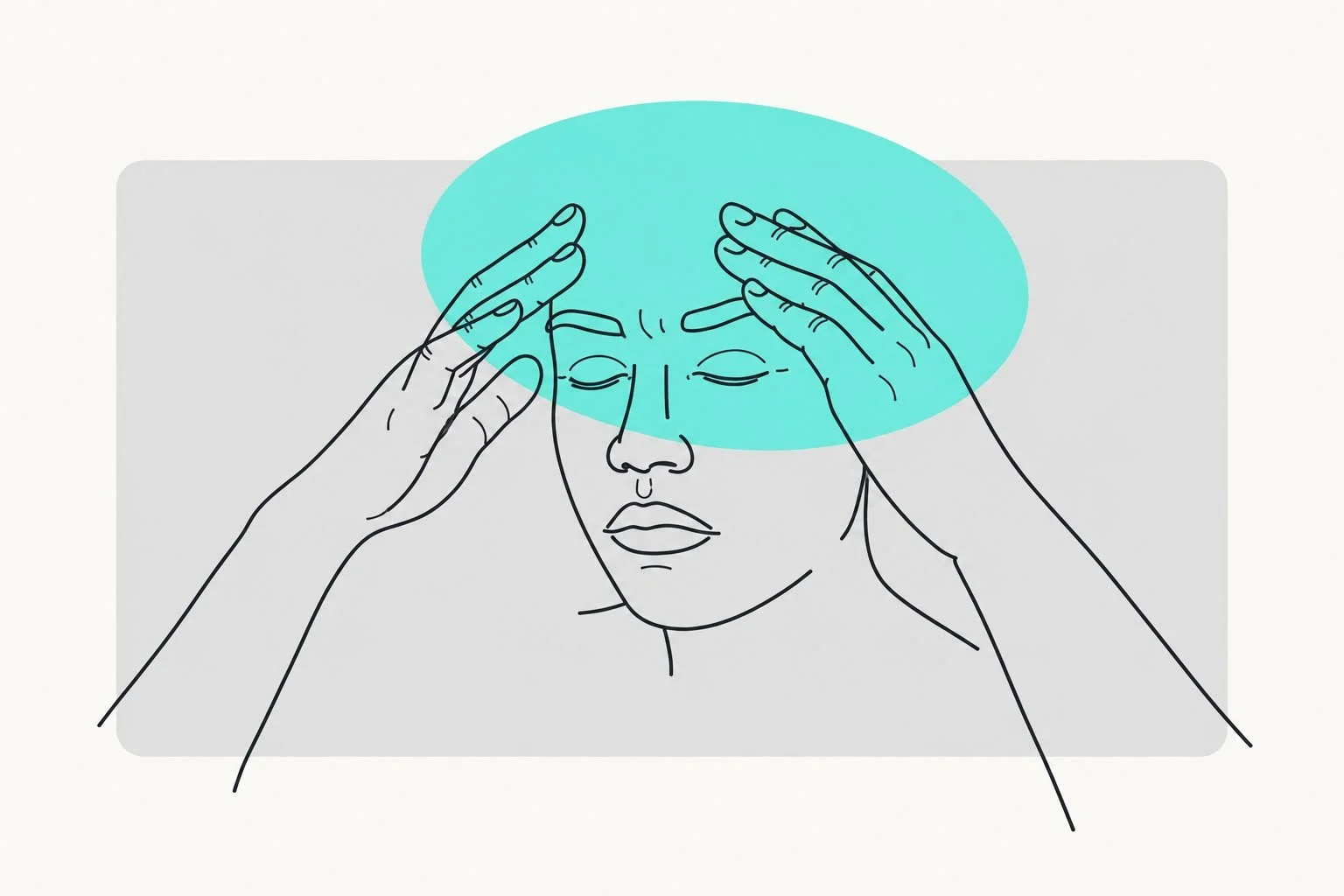
Migraine is much more than a bad headache.
For many people, migraine can involve severe head pain, nausea, vomiting, sensitivity to light and sound, visual disturbances, dizziness, fatigue, brain fog and significant disruption to work, exercise, family life and social activities.
Importantly, migraine is a neurological disorder, and modern migraine management increasingly recognises that there is no single treatment that works for everyone. Effective care often involves a combination of medical treatment, lifestyle strategies, education and appropriately prescribed exercise or rehabilitation.
So where does physiotherapy fit?
For people whose migraine is accompanied by neck pain, dizziness, balance problems, sensitivity to movement, physical deconditioning or musculoskeletal contributors, neurological physiotherapy can be an important part of a broader migraine management plan.
What is migraine?
Migraine is a neurological condition involving altered processing within the nervous system. It can occur with or without aura.
An attack may involve:
Moderate to severe headache, often but not always on one side
Nausea or vomiting
Sensitivity to light, sound, smells or movement
Visual symptoms or other neurological symptoms
Neck pain or stiffness
Dizziness or vertigo
Fatigue and difficulty concentrating
Migraine is highly individual. Two people with migraine can experience very different symptoms and have very different triggers and treatment responses.
This is one reason why modern management focuses on an individualised treatment plan, rather than simply treating the headache itself.
Medication can address important neurological mechanisms involved in migraine, while physiotherapy may address the physical, movement and vestibular components that can contribute to disability.
What role can a neurological physiotherapist play?
A neurological physiotherapist does not diagnose migraine or replace medical migraine treatment.
Instead, our role is to assess how migraine is affecting your movement, nervous system, neck, balance, physical capacity and day-to-day function. Migraine Australia recognises physiotherapy as one of several supportive therapies that may assist people living with migraine, alongside medical management.
A neurological physiotherapy assessment may consider:
1. Neck pain and cervical dysfunction
Neck pain is very common in people with migraine. However, it is important to understand that neck pain does not necessarily mean the neck is causing the migraine.
For many people, neck discomfort can actually be part of the migraine attack itself. It can also be a secondary problem related to altered movement patterns and inactivity as a result of migraine attacks. Our physiotherapists can assess whether there are co-existing musculoskeletal issues such as reduced cervical movement, muscle sensitivity, weakness or movement-control problems that may be contributing to symptoms or disability.
Treatment can then be directed at the impairments that are actually present. Manual therapy, massage and other hands-on techniques may be useful for selected people, particularly when there are identifiable musculoskeletal impairments. However, hands-on treatment should generally be viewed as one component of rehabilitation rather than a "cure" for migraine.
2. Exercise and physical activity
Regular physical activity is increasingly recognised as an important component of migraine management.
Research and clinical guidelines support exercise interventions for improving migraine symptoms, disability and quality of life. Evidence is particularly supportive of moderate intensity aerobic exercise and yoga, while resistance exercise, relaxation-based approaches and other forms of exercise may also be useful for some people.
For someone with frequent migraine, exercise itself can sometimes provoke symptoms, particularly when they are deconditioned, fatigued or exercising at an intensity that exceeds their current capacity.
A physiotherapist can help develop a graded and individualised exercise program, taking into account:
Current fitness and activity levels
Migraine frequency
Exercise tolerance
Sleep and fatigue
Neck and shoulder symptoms
Balance and vestibular symptoms
Work and lifestyle demands
The person's goals and preferences
The aim is to build physical capacity without repeatedly pushing the nervous system beyond its current tolerance.
3. Vestibular symptoms and dizziness
Some people with migraine experience prominent dizziness, vertigo, visual sensitivity or problems with balance.
Vestibular rehabilitation can be particularly relevant for people experiencing these symptoms.
Our vestibular and neurological physiotherapists can assess:
Balance
Eye movements
Head movement tolerance
Visual motion sensitivity
Gait
Vestibular function
Habituation to movement
Confidence with everyday activities
Treatment may involve individualised gaze-stability exercises, balance exercises, habituation, movement exposure and functional rehabilitation depending on assessment findings and goals.
4. Sensitivity to movement and the nervous system
People living with migraine can become increasingly sensitive to certain movements, environments or sensory inputs.
For example, supermarkets, busy environments, screens, scrolling, head movements or visually complex surroundings may become difficult to tolerate.
Neurological physiotherapy can help identify these sensitivities and progressively work towards improving tolerance.
This may involve carefully graded exposure rather than complete avoidance.
The goal is to help people return to meaningful activities while respecting symptom thresholds.
5. Strength, posture and physical capacity
Migraine can have a substantial impact on physical activity.
Repeated attacks may lead someone to avoid exercise, reduce social activities or spend significant periods resting. Over time, this can contribute to reduced strength, fitness and confidence.
Physiotherapy can help address these secondary consequences.
Depending on the individual, rehabilitation may include:
Postural and movement-control exercises
General resistance training
Aerobic conditioning
Balance training
Functional retraining
Education around activity pacing
The objective is not to achieve a "perfect posture". Instead, we want to improve movement capacity, physical confidence and participation in everyday life.
6. Education and self-management
One of the most valuable aspects of physiotherapy can be education to improve understanding of migraine mechanisms and the evidence for migraine management.
Education may include discussion of modifiable lifestyle factors including:
Identifying potential migraine triggers and thresholds for attacks
Exercise and physical activity
Pacing and gradual progression
Sleep hours
Mealtimes
Hydration
Stress management and relaxation strategies
Managing dizziness and movement sensitivity
When to seek medical review
When should you see a doctor or neurologist?
Physiotherapy is not a substitute for medical assessment.
If you experience recurrent migraine, particularly if attacks are becoming more frequent, severe or disabling, it is important to discuss your symptoms with your GP or an appropriate medical practitioner.
A doctor or neurologist can:
Confirm the diagnosis
Exclude other causes of headache where appropriate
Develop an acute migraine treatment plan
Consider preventive medication
Review medication effectiveness and side effects
Consider newer migraine-specific treatments
Refer to a headache specialist when appropriate
The latest Australian Therapeutic Guidelines include updated information on migraine diagnosis, preventive treatment and CGRP-targeted therapies, highlighting how rapidly the medical management of migraine is evolving.
When should a headache be assessed urgently?
Not every new or severe headache is migraine.
Seek urgent medical assessment for a sudden, extremely severe headache or a headache associated with concerning neurological or systemic symptoms, particularly if it is new or substantially different from your usual pattern.
Examples include sudden onset of severe headache, new weakness or numbness, difficulty speaking, significant confusion, fainting, seizure, fever with neck stiffness, or other acute neurological changes.
If you are unsure whether your symptoms are consistent with your usual migraine, seek medical advice.
The take-home message
Migraine is a complex neurological condition, but there are more treatment options available today than ever before.
Modern migraine management may combine medical treatment with lifestyle strategies, education, exercise and rehabilitation.
Neurological physiotherapy can play an important supporting role, particularly for people whose migraine is accompanied by neck pain, dizziness, balance problems, movement sensitivity, physical deconditioning or difficulties returning to normal activity.
The goal isn't simply to make someone better at coping with migraine.
The goal is to help people move better, build physical capacity, reduce disability and return to the activities that matter to them, while working alongside their GP, neurologist and other healthcare professionals.
If migraine is affecting your movement, exercise, balance, neck function or ability to participate in everyday life, a neurological physiotherapy assessment may be a useful part of your overall management plan.
References
Migraine Australia https://www.migraine.org.au/
Useful information regarding migraine thresholds, triggers and multidisciplinary management options
Headache Australia https://headacheaustralia.org.au/migraine-headache-awareness-week-2026/
Prescription of therapeutic exercise in migraine, an evidence-based clinical practice guideline.
La Touche R, Fierro-Marrero J, Sánchez-Ruíz I, Rodríguez de Rivera-Romero B, Cabrera-López CD, Lerma-Lara S, Requejo-Salinas N, de Asís-Fernández F, Elizagaray-García I, Fernández-Carnero J, Matesanz-García L, Pardo-Montero J, Paris-Alemany A, Reina-Varona Á. Prescription of therapeutic exercise in migraine, an evidence-based clinical practice guideline. J Headache Pain. 2023 Jun 7;24(1):68. doi: 10.1186/s10194-023-01571-8. PMID: 37286937; PMCID: PMC10245624.
