
A fall is defined as an event causing a person to unintentionally come to be on the ground, floor or lower level. In Australia, 30% of falls result in injuries requiring medical treatment and 10% are serious injuries (such as fractures). Falls are the leading cause of injury-related death. Almost two-thirds of falls are caused by slips, trips and balance problems.
Falls risk factors - are you at risk?
There are a large number of well-researched falls risk factors, which means that these factors can increase your risk of falling. We can think about these factors in a number of different categories:
Demographic risk factors
Advanced age
Falls risk increases significantly from the age of 80
History of falls
Difficulty or limitation undertaking usual daily activities
Fear of falling
Women are also at a higher risk of falls than men
A note on fear of falling
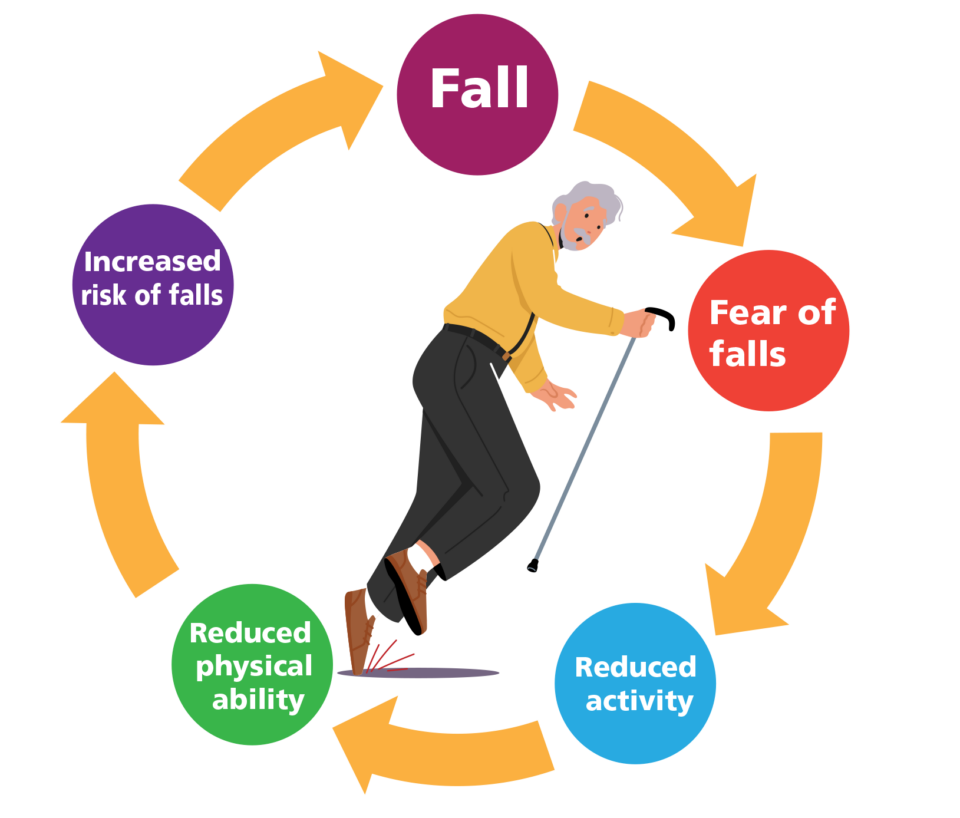
Fear of falling reduces confidence and can limit participation in daily activities, resulting in a vicious cycle of reduced physical activity and worsening physical ability
Fear of falling affects people who have fallen AND people who have not yet fallen
It is more common in women > men, and increases with advancing age
Medical risk factors
Impaired cognition/depression
Stroke
Parkinson’s Disease
Incontinence
Acute illness
Vestibular disorders
Arthritis
Foot problems
Diabetes
Abnormal neurological signs
Orthostatic hypotension (blood pressure that drops quickly when you move from lying, or sitting, to standing)
Medication risk factors
Certain medications including benzodiazepines, antidepressants and antipsychotics are known to increase the risk of falls in older persons
One of the other key medication risk factors includes the use of more than 4 medications.
Sensory & neuromuscular risk factors
Vision changes
Poor visual contrast sensitivity
Reduced depth perception
Greater reliance on vestibular and somatosensory systems when vision is reduced
Multiple age-related changes contributing to increased risk of falls in dim lighting and difficulty judging steps/curbs/obstacles
Reduced peripheral sensation
Peripheral neuropathies can result in loss of sensation in the feet
Reduced vestibular function
Vestibular function declines with ageing, contributing to impaired balance and mobility
Vestibular impairment can result in dizziness, vertigo and balance problems
Dizziness in older adults is common and affects 10-30% of older people
Chronic vestibular symptoms are associated with an increased risk of falls
Vestibular disorders account for around 48% of dizziness
Muscle weakness
Age related muscular changes
We all experience a progressive loss of muscle mass from our mid-20s
Muscle mass diminishes by 35-40% by 80 years of age
Muscle strength decreases by 50% by 80 years of age
Reduced hip, knee and ankle strength increases falls risk
Strength gains improve balance and stability
Balance & mobility risk factors
Impaired stability when leaning and reaching
Slow voluntary stepping
Impaired gait and mobility
Impaired ability in standing up
Impaired ability with transfers
Impaired stability when standing
Poor reactive stepping
A note on balance and reaction time
Balance is the ability to maintain your centre of mass over your base of support (usually your feet), within your limits of stability. It relies on a combination of sensory information from:
The visual system
What you see
The vestibular system
An inner-ear balance organ in each ear senses head movement in different directions and linear acceleration
The somatosensory/proprioceptive system
What you feel - tactile information from the hands and feet, with input from muscles and joints
Your brain needs to process and integrate information from each of these systems and generate an effective motor (movement) response.
Reaction time slows as we get older, which reflects slower processing speed
Ageing slows information processing and reduces attentional capacity
Adding a second task further slows reaction time (divided attention)
Challenges with divided attention include walking while talking, navigating uneven surfaces, carrying items
Slower reaction time delays protective stepping, affects balance and increases falls risk
So…what can you do about it?
In addition to considering the falls risk factors outlined above, you can screen your own falls risk by asking yourself 2 questions:
Have you fallen in the past 12 months?
Are you worried about falling?
If you answer yes to either or both of these questions, you are likely to benefit from a thorough falls risk assessment. Physiotherapists play a key role in falls risk assessment and ongoing falls prevention and management.
Falls Prevention - The Current Evidence
The Australian Commission on Safety and Quality in Healthcare published updated Best Practice Guidelines for preventing falls and harm from falls in Older People in 2025.
Exercise
There is good quality, high level evidence (based on research) to recommend that people at risk of falls should engage in exercise as a key part of falls prevention intervention. The evidence tells us that exercise for falls prevention should involve:
A tailored (individualised), supervised exercise program
Targeted strength, balance and mobility exercises
This needs to be in addition to any incidental physical activity or walking
2-3 hours of this type of exercise per week, on an ongoing basis
For people at lower risk of falls (1 per year), it may be appropriate to participate in community-based exercise programs or a Physiotherapy-prescribed home exercise program.
People at high risk of falls (2 or more falls per year) should have a comprehensive assessment from a Physiotherapist to assess their falls risk factors and provide them with a tailored exercise program for falls prevention. Physiotherapists make sure that you can complete your exercises safely and effectively, and will work with you to explore how you can achieve the recommended level of strength, balance and mobility training for falls prevention.
There is evidence that people with mild-moderate Dementia (cognitive impairment) should also be supported to participate in exercise to prevent falls.
Other considerations
In addition to exercise, the best practice guidelines include strong evidence to support a number of multi-factorial falls prevention strategies including:
Home safety assessments and tailored home safety intervention delivered by an Occupational Therapist (OT)
Medication reviews
Vision reviews
Assessment of feet & footwear
Nutrition advice
Continence assessments
Strategies to address concerns about falling, anxiety, depression and cognitive impairment
At Bespoke Physiotherapy, we can help!
Our Physiotherapists can:
Complete thorough individual physical assessments that considers the function of each sensory system that contributes to balance and your motor (movement) control including strength, coordination and flexibility
Complete full vestibular assessments as indicated
Screen for other multifactorial falls risk factors and refer on as needed for further assessment and intervention
We can communicate with your GP and help to facilitate referrals to other healthcare professionals including Occupational Therapists, Podiatrists, Dietitians and Continence Clinics
Provide ongoing individual (1:1) sessions or small group exercise classes to undertake tailored, supervised falls prevention exercise
Prescribe a home exercise program that is safe for you to complete independently
Discuss whether telehealth sessions are a safe and effective option for you if you have difficulty attending our clinic in person
